THE PROBLEM
Where the friction starts.
A workout plan is only useful if it survives contact with the garage. Two lifters need different targets, clear instructions, a way to log progress, and a shared view of what happens next. Adjustments made in chat also need to reach the equipment without creating a second, conflicting plan.
THE APPROACH
A system around the task.
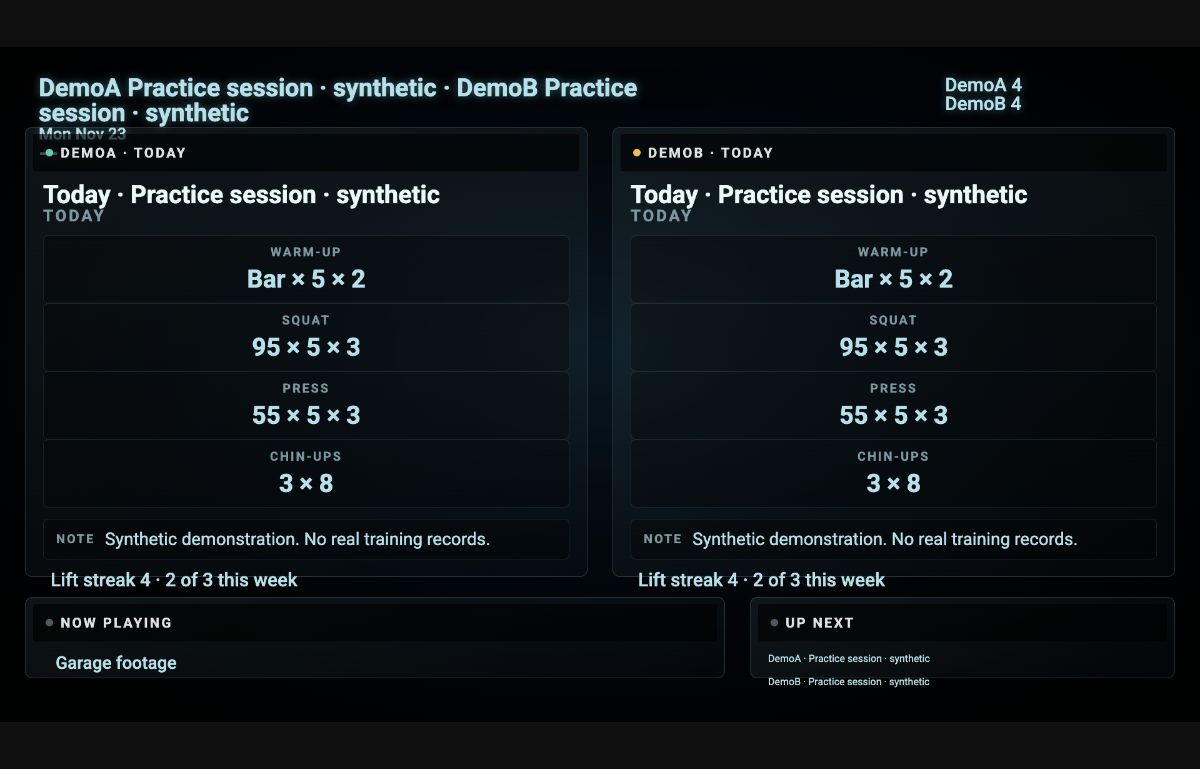
Garage Gym separates the training logic from the screens that use it. A local server maintains the program and session state; an iPad provides input, while a large TV display makes the current work readable across the room. Agent tools use the same contracts as the human-facing controls.
- Training history
- Program rules
- Shared session
- TV + iPad
WHAT WAS BUILT
The choices that make it work.
One training brain
Deterministic logic handles plate loading, warm-ups, progression, accessory work, and conditioning. The reasons behind a weight or next step travel with the plan.
A shared, live session
A SQLite-backed server and live event stream keep the controller and TV aligned. The display distinguishes active work, rest, today’s plan, and completed work.
Boundaries around agent edits
Typed tool contracts, revision checks, idempotency, device identity, and audit events make changes attributable. Youth-specific rules and coach-presence requirements are enforced in server-side gates.
CURRENT STATE
Working evidence. Clear boundaries.
The source contains a working training application, multiple development phases, a TV interface, an agent control surface, and device runbooks. The screenshot runs the original display against synthetic session state; it does not reproduce anyone’s workout history.
Physical kiosk bring-up and some hardware-dependent acceptance checks remain separate from the browser implementation. No training, injury-prevention, or health-outcome improvement is claimed.
Source and capture notes
README, training-brain and contract packages, display source, TV/iPad runbooks, and project history.
Reviewed November 23, 2026. Visuals are captured from source applications or their original renderers in isolated previews. Synthetic content is demonstration data, not a project outcome metric.