LeaderStack

THE LEADERSTACK PORTFOLIO

Useful ideas.
Working systems.

From the critical care floor to the family kitchen. Independent software and research, built around problems worth solving.

Ryan Morales
Critical care nurse. Founder. Builder.

MISSION CONTROL / LOCAL DEMO
Mission Control running in an isolated workspace with synthetic agents and tasks
FEATURED SYSTEMThe work behind the work.Mission Control · Agent operations
Built from domain knowledge. Developed with AI. Judged by evidence.SOFTWARE / RESEARCH / EVERYDAY LIFE

SELECTED WORK

Go deeper on the build.

Three starting points.
A shared habit of making ideas testable.

AGENT OPERATIONSWorking local system

Mission Control

A place to see the work,
understand the state,
and decide what comes next.

As projects and AI tools multiply, coordination becomes its own problem. Mission Control brings project attention, agent status, review queues, and bounded handoffs into one operating surface.

Agent coordinationPersistent contextHuman review
Read the case study

The problem

Work spread across agents, machines, and repositories is difficult to inspect and hand off reliably.

The build

A Next.js and SQLite operations application with views for current work, flow, fleet, projects, and review. AI-assisted development supports typed contracts and explicit execution controls.

The result

A running local coordination system. The audited release includes read-only project briefs and a shadow policy that gates live model and work execution. It is an operating tool under continued development, with no claimed autonomy or ROI benchmark.

Verified against source and history through commit ecdbaab, November 13, 2026. Private repository.
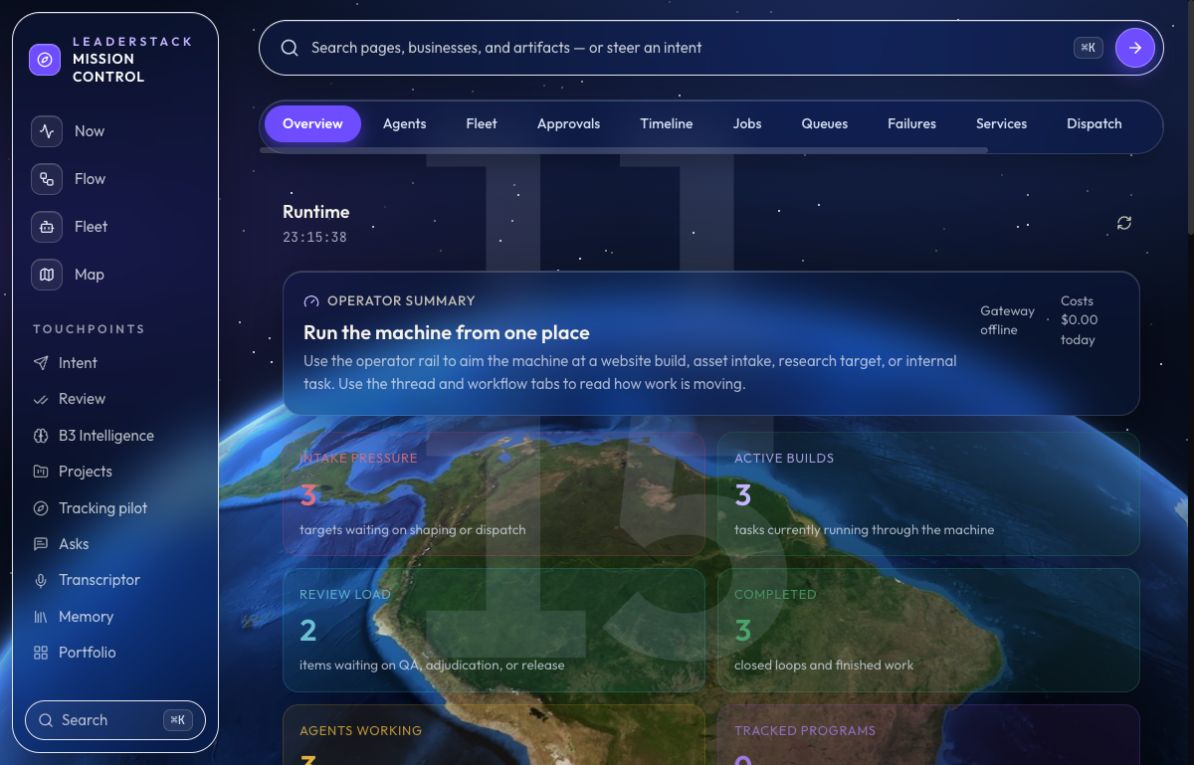
Actual Mission Control application displaying a synthetic agent operations workspaceView screenshot
Original application · synthetic workspace · external execution disconnected
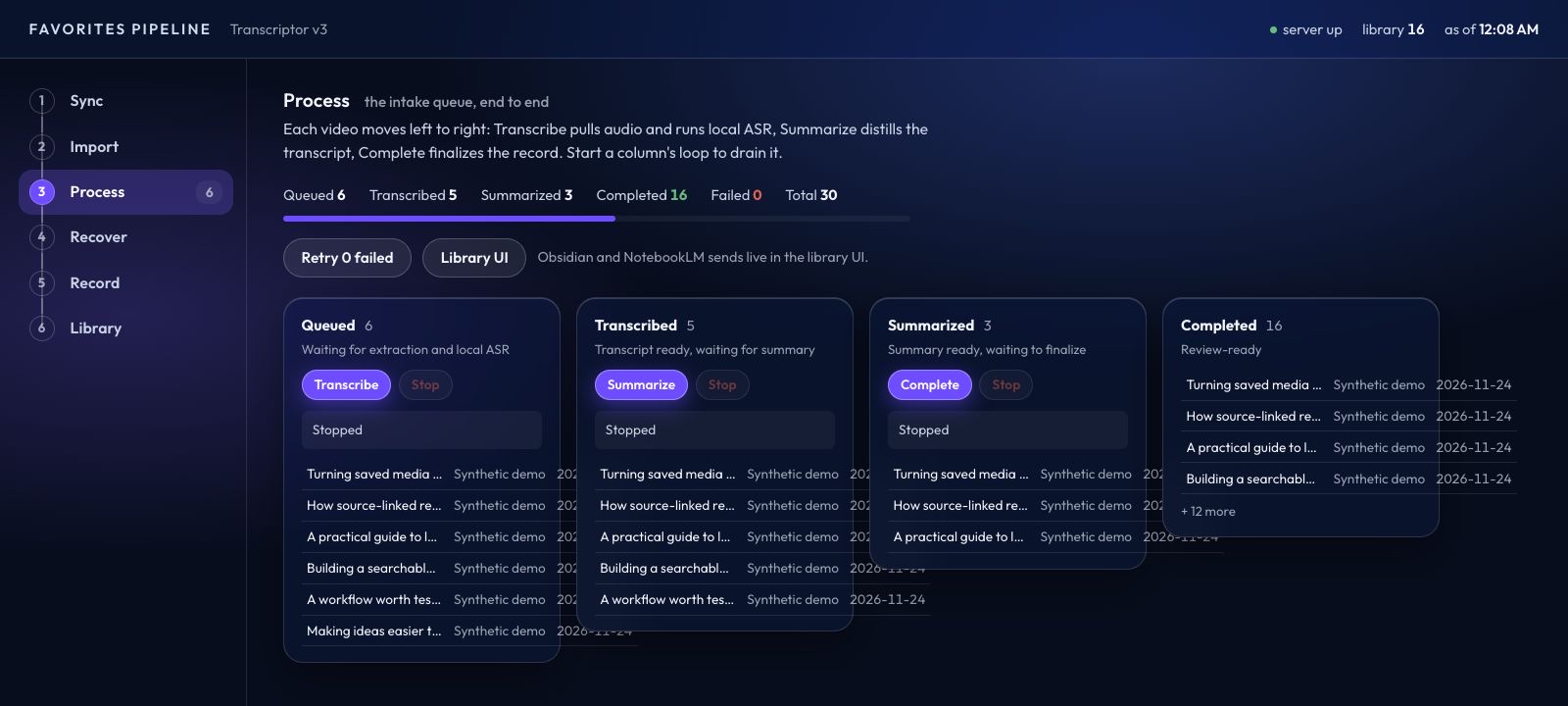
Transcriptor v3 pipeline showing the queued, transcribed, summarized, and completed stages with synthetic recordsView screenshot
Original v3 pipeline interface · synthetic queue · processing disconnected
LOCAL KNOWLEDGERunning locally

Transcriptor v3

Saved media becomes
knowledge you can find.

Unstructured video, audio, captions, and metadata arrive from different places and in different formats. Transcriptor v3 brings them into one local knowledge workflow: collect through APIs and media extractors, transcribe audio when captions are missing, and organize the result around its original source.

CollectExtractTranscribeReview
Read the case study

The problem

Useful knowledge is scattered across saved videos, audio, captions, comments, and source metadata. The challenge is turning that unstructured material into something consistent enough to search and revisit.

The build

API-based intake, favorites imports, browser relay capture, and media extractors feed a TypeScript and SQLite pipeline. TikTok, YouTube, and Instagram sources are normalized into a shared record model. Local speech recognition fills caption gaps; model-assisted summarization and export support downstream knowledge tools. The original transcript and provenance remain available for review.

The result

A working local knowledge system that makes disparate media searchable and recoverable. The pipeline exposes stages and failures so missing audio, blocked extraction, and unreviewed summaries stay visible. Output quality depends on source review; no summarization accuracy or throughput benchmark is claimed.

Implementation checked against source and history at d15979e plus local changes, and a read-only library query. Private source.

STATISTICAL RESEARCHExperiment complete

MMCM

Can the edges of a population
tell us where the whole is going?

The Marginal Mutation Cascade Model asks whether changes at a distribution’s margins can warn of a later shift in its mean. A pre-registered experiment put that intuition up against simpler statistical baselines.

A VALID RESEARCH OUTCOMEThe first test returned a negative result.

The tested signal did not outperform its baselines. The evidence, limitations, and procedural lessons remain part of the work.

Read the findings

The experiment

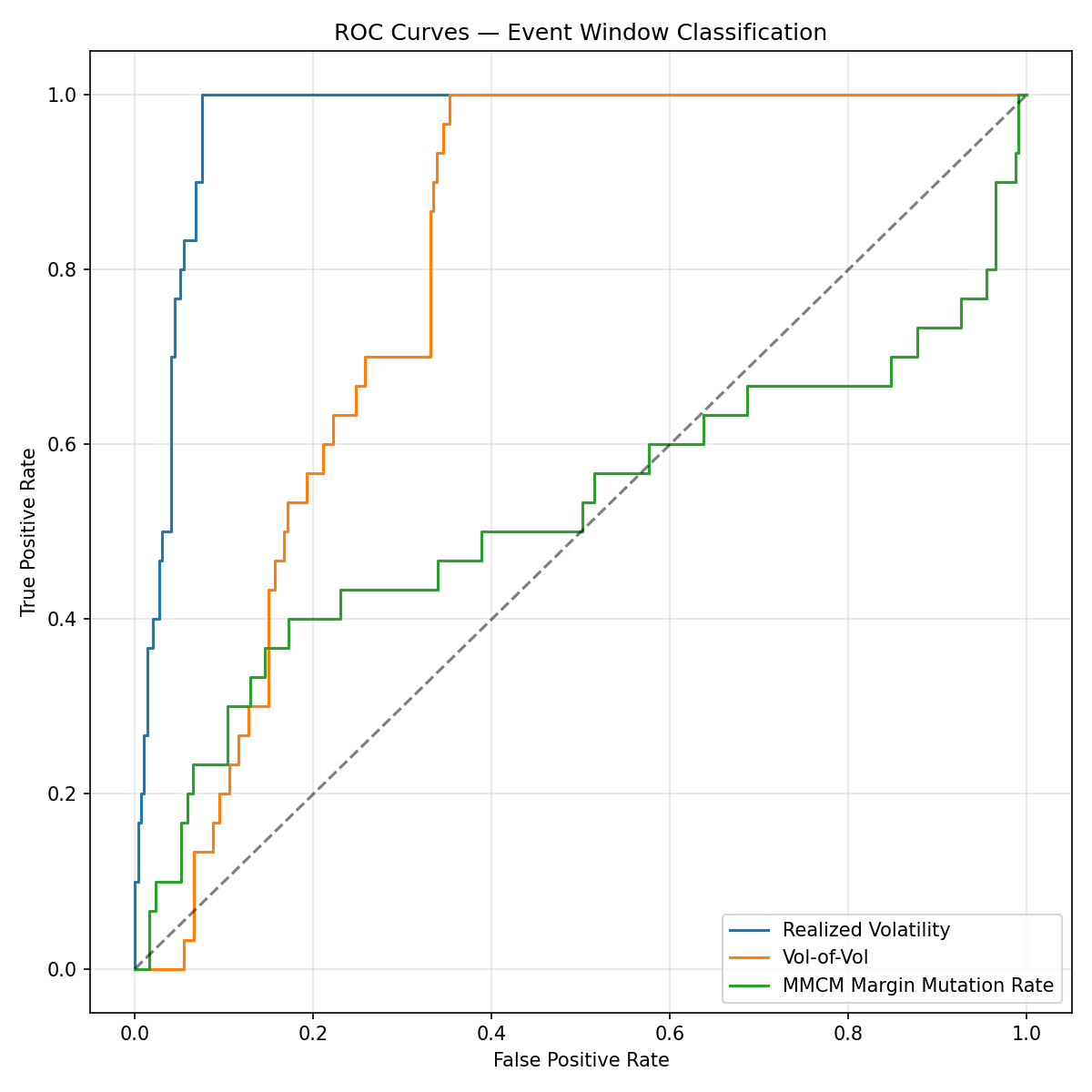
Historical S&P 500 returns were used to compare a margin mutation signal with realized volatility and volatility-of-volatility. AI helped formalize the hypothesis, implement the experiment, and audit its execution.

The result

MMCM AUC was 0.524, compared with 0.967 for realized volatility and 0.799 for volatility-of-volatility. All four pre-registered failure criteria triggered. The programmatically identified event was January 4, 2008, rather than the anticipated Lehman event.

What it teaches

The specific signal failed on this test; that result does not settle every possible margin-based hypothesis. Current constituents introduce survivorship bias, the threshold was amended, and the post-mortem flags uncertainty-estimation limitations. A new experiment needs a new hypothesis.

Source: committed metrics.json, experiment report, and post-mortem, May 18, 2026, history through 648e46d. The report and metrics disagree on one confidence interval, so no interval is presented here. Private repository.

EXPERIMENT 01Original research output
Original ROC curves: realized volatility and volatility-of-volatility outperform the tested MMCM signalInspect the plot
Committed experiment output · event-window classification

LARGER SYSTEMS

Built to keep
working.

Longer builds with persistent state, integrations,
and more than one screen to get right.

The interesting work often sits between the screens: reconciling sources, maintaining shared state, keeping decisions inspectable, and recovering when something stops working. These case studies follow those choices.

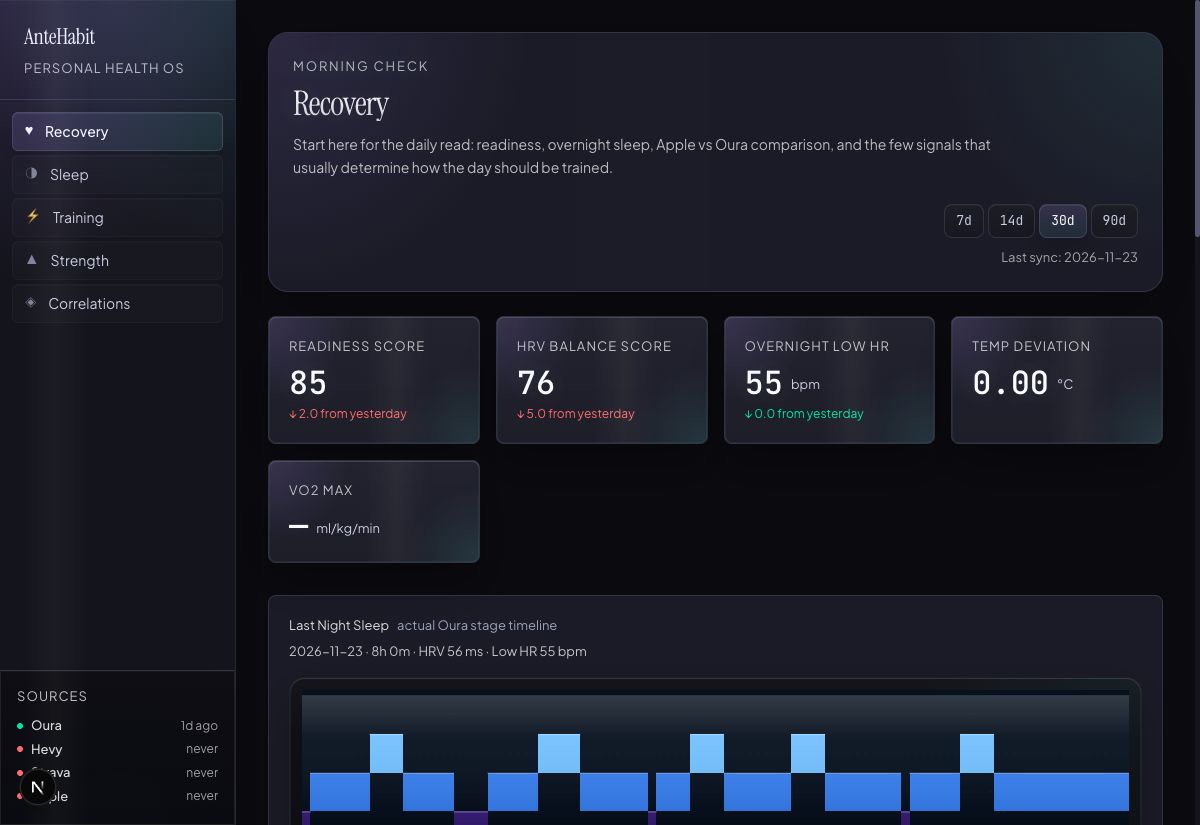
AnteHabit recovery dashboard displaying synthetic readiness, heart-rate, and sleep-stage dataExplore the build
PERSONAL DATA SYSTEMS

AnteHabit

A personal health data system that brings recovery, sleep, activity, and strength records into one inspectable local view.

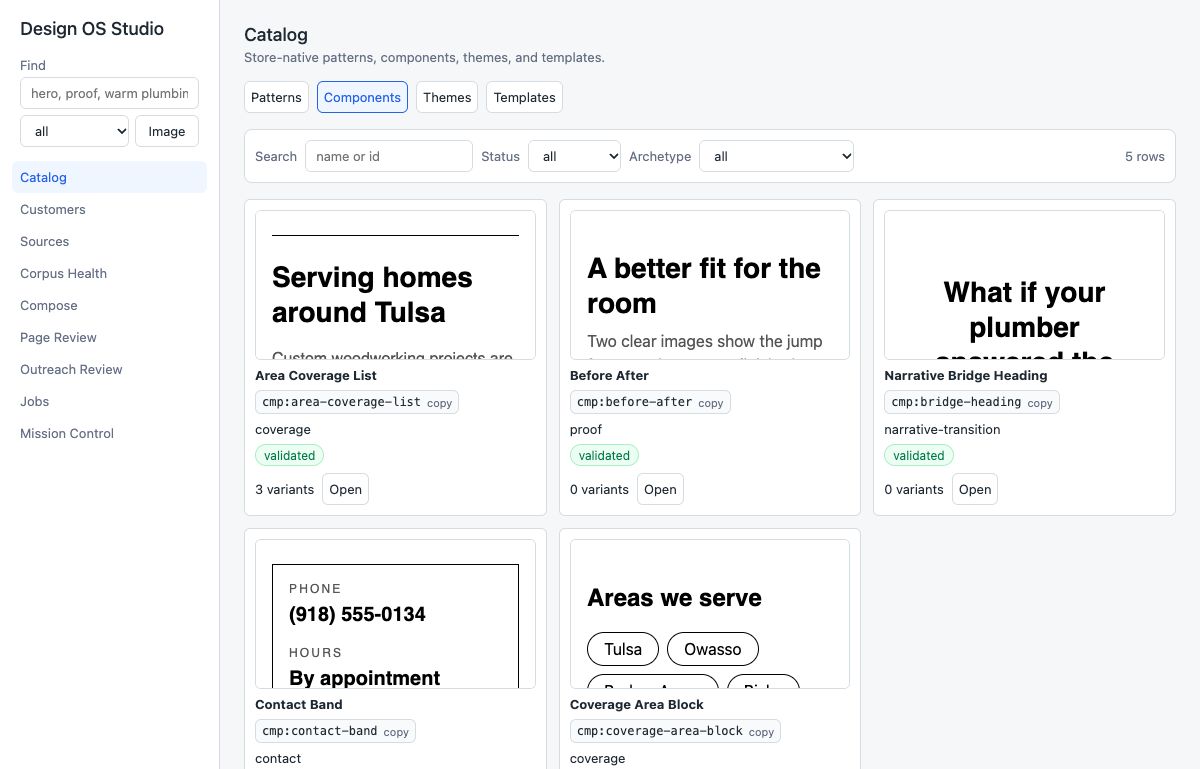
Design OS Studio showing reusable components with previews, archetypes, validation states, and variantsExplore the build
DESIGN INFRASTRUCTURE

Design OS

An evolving design system for turning references, reusable components, themes, and review into an inspectable body of knowledge.

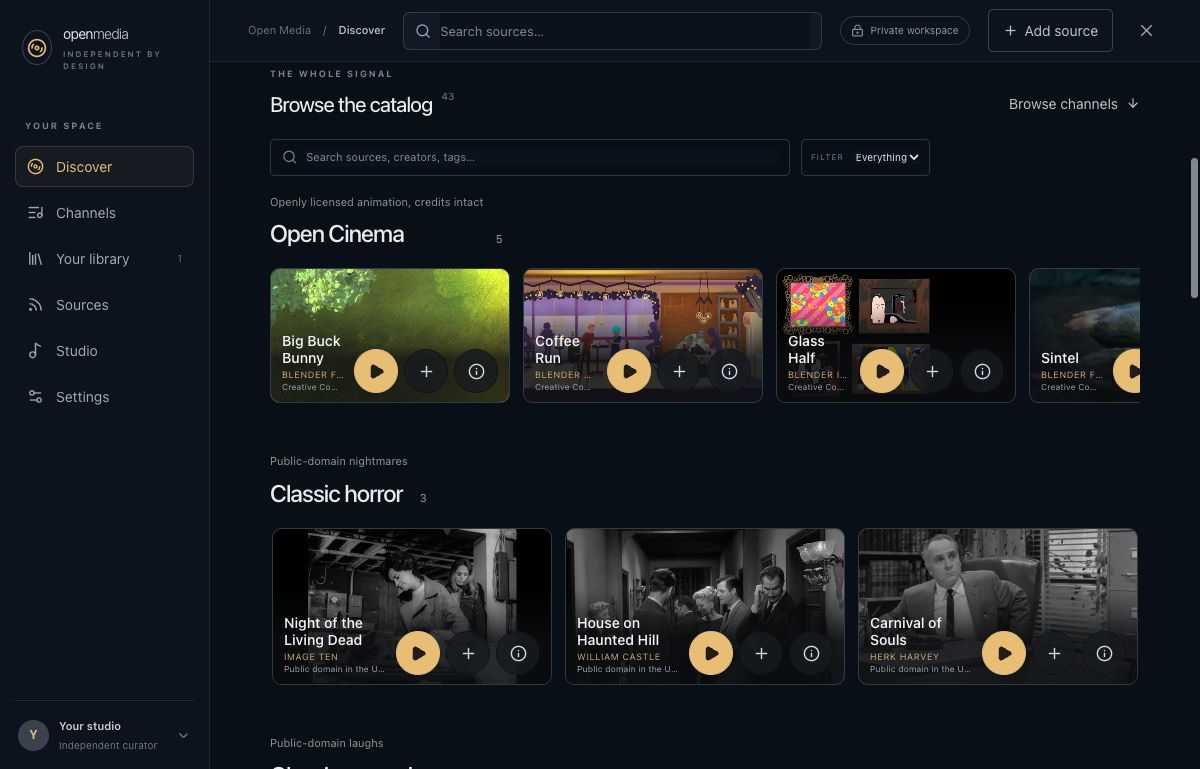
Open Media application showing its populated sample catalog with original-source media and attributionExplore the build
MEDIA SYSTEMS

Open Media

Curator-led media discovery with original-source playback, private collections, reviewable AI drafts, and portable signed publications.

THE FAMILY WORKSHOP

Small audience.
Real reasons to build.

Some of the best product briefs
start at home.

HOME INTERFACELocal prototype

The Bender tablet

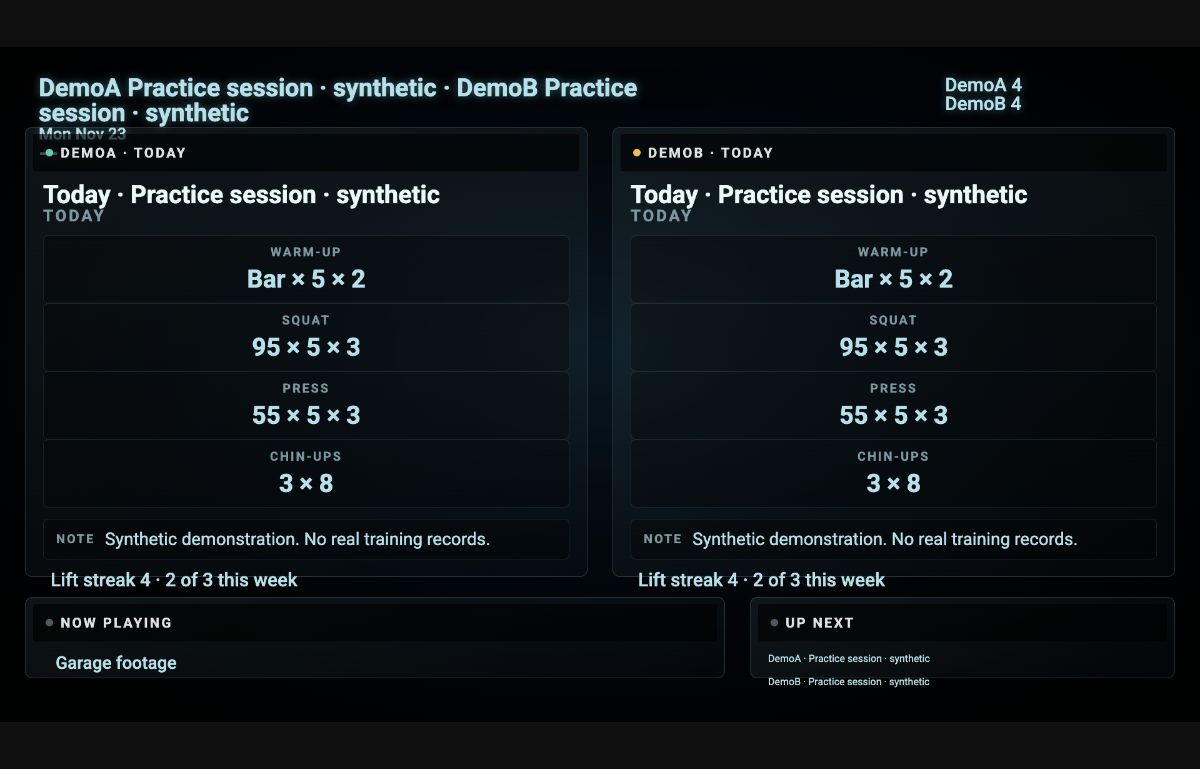
An old tablet becomes a shared home screen with a little personality. Bender materializes when called, talks through an animated particle face, then disappears back into the household dashboard.

Built on MagicMirror² and Three.js, with local wake-word detection, speech-to-text, a local language model, and Piper text-to-speech. The animation captures the original dashboard and avatar using synthetic data and local preview speech; it demonstrates the interface sequence, rather than a live microphone-to-model session.

Source and history verified at fe95a40 plus local dashboard changes. Personal fan project; Bender is a Futurama character. No affiliation implied.

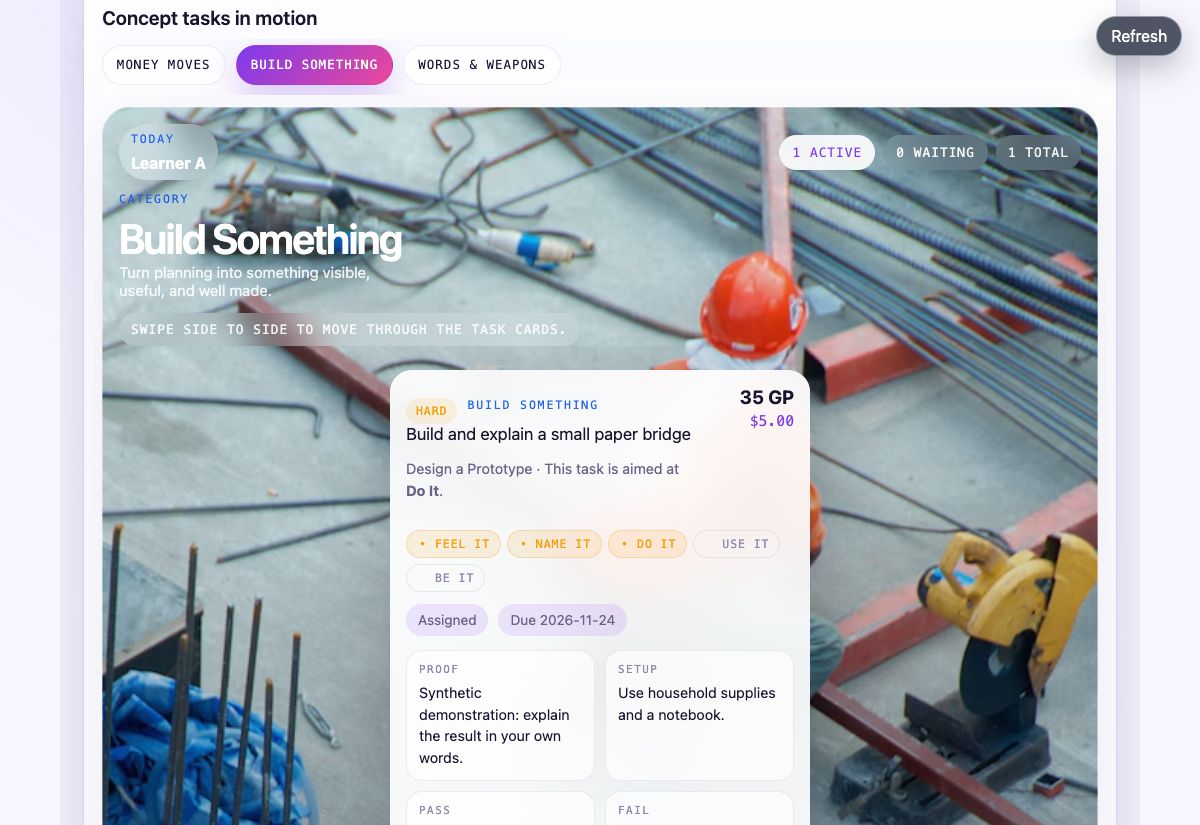
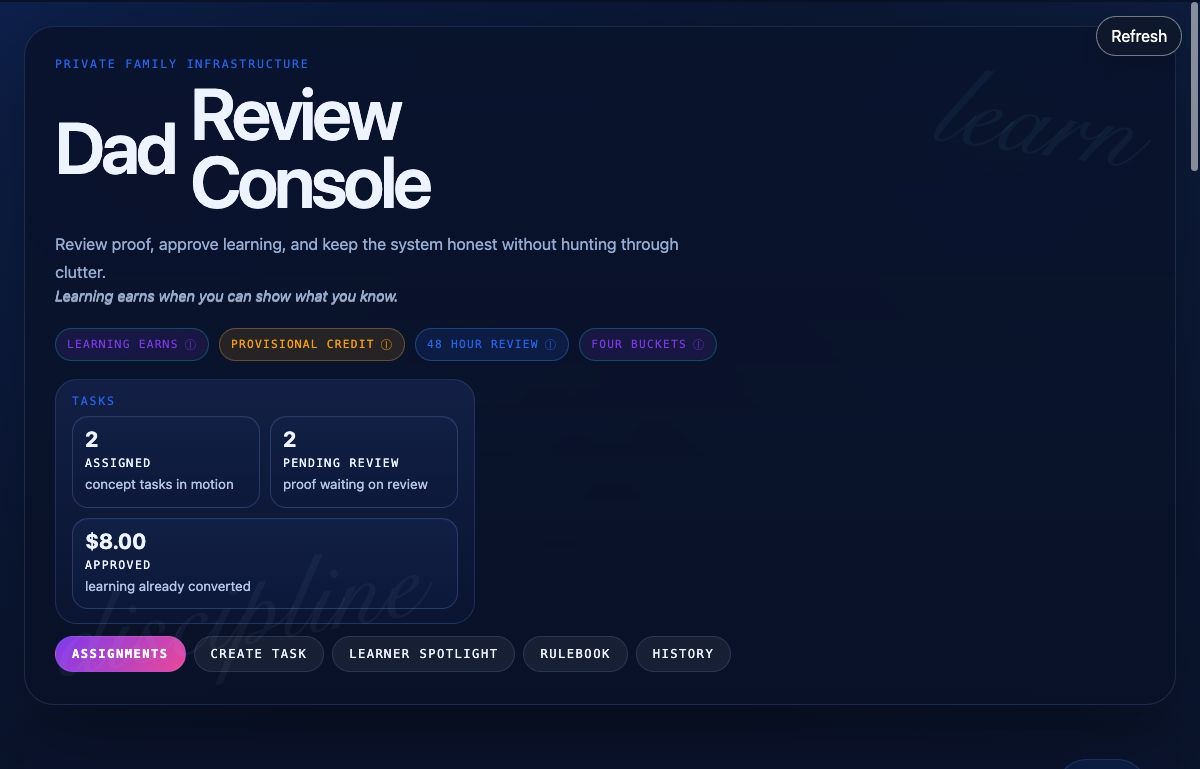
Actual Dad’s Learn and Earn child-facing view with fictional Learner A, an active building challenge, learning stages, points, and rewardsView the app
Original child-facing app · fictional learner · synthetic challenge
LEARNING BY DOINGWorking local application

Dad’s Learn & Earn

A parent-built learning app that turns big concepts into real-world challenges. Learners submit evidence, earn provisional credit, and get a reasoned approval or a chance to try again.

A Python and SQLite application with a family board, learner views, a parent review console, and concept-based task creation. Points reward demonstrated learning; approved earnings are divided across Spend, Save, Invest, and Give.

Captured from the built application with a new synthetic database. Learner names are fictional, family portraits are omitted, and no children’s records or proof media are shown. View the parent console.

THE WIDER WORKBENCH

Experiments worth keeping.

Design studies and research directions,
with their current stage left visible.

Earlier explorations

Founder-described work. Source archives were unavailable during this review; no outcome metrics or live demos are claimed.

HEALTHCARE OPERATIONS

NDX Neuro Triage Line

Making the coordination around a neurology consult service more visible: translating clinical workflow knowledge into a structured approach to consult distribution and provider workload.

RESOURCE ALLOCATION

Hospital staffing optimization

Exploring how staffing data can reveal differences in resource allocation across departments and give operational decisions a clearer evidence base.

DISTRIBUTED MEDIA

Ankarp.tv

An earlier exploration of algorithmic curation and alternative media distribution. Included as part of the wider body of work; its implementation status has not been reverified.

WEBSITES & DESIGN DIRECTIONS

Smaller scope.
A clear job to do.

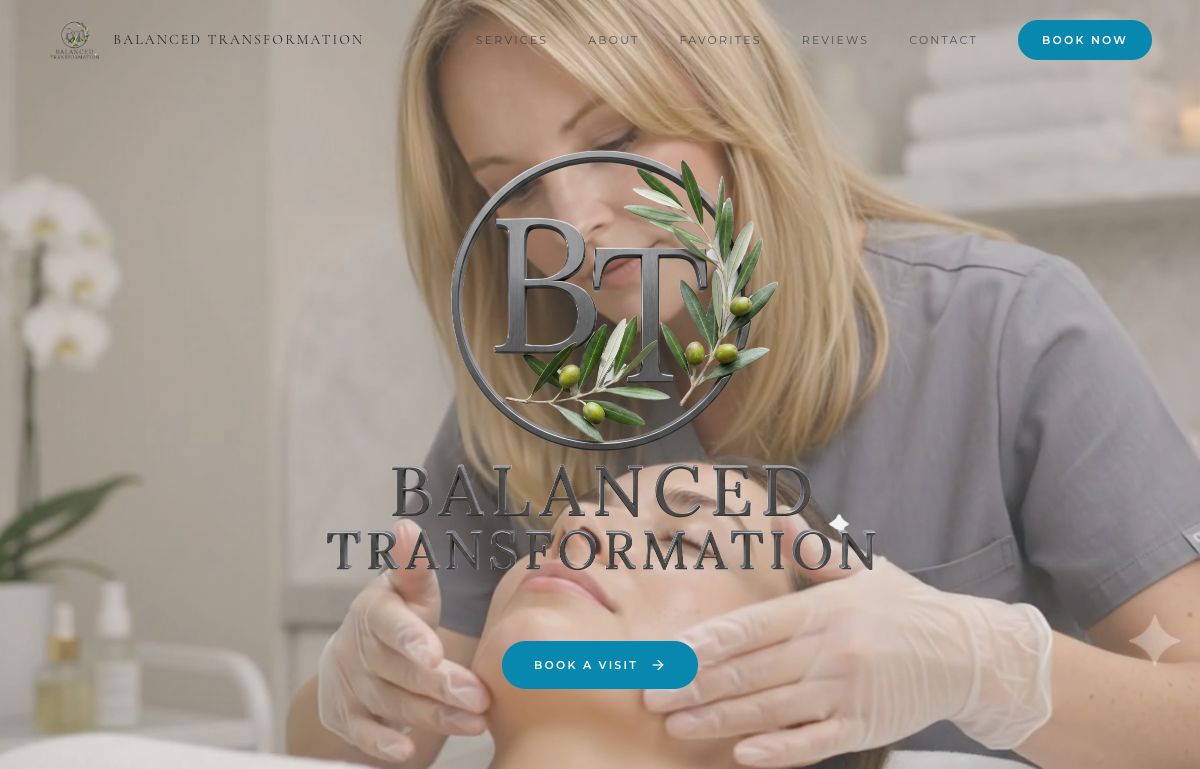
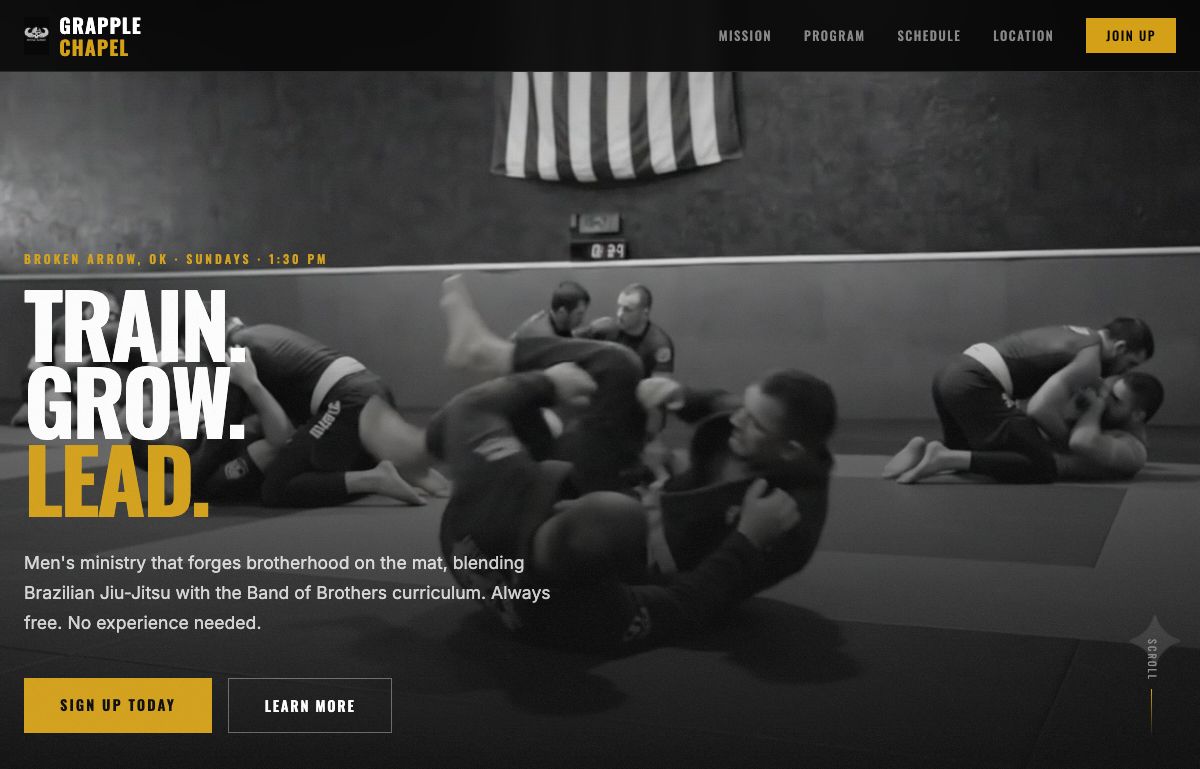
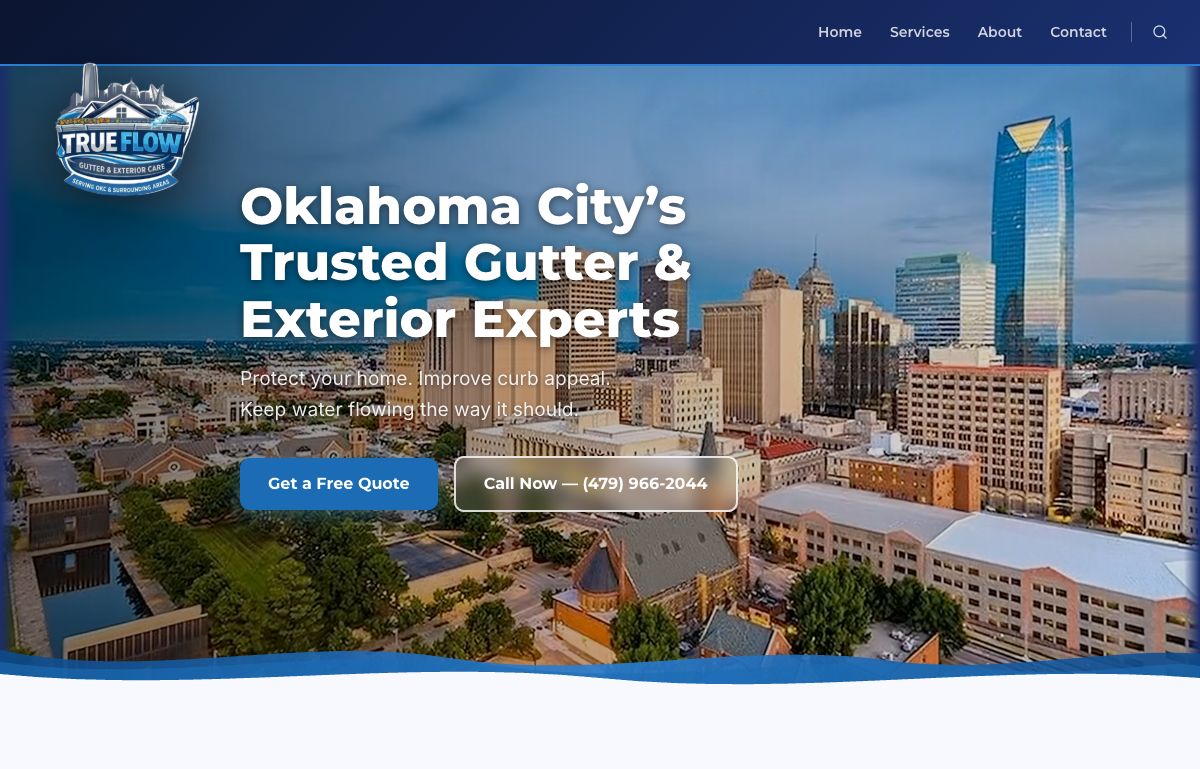
A compact index of website work.
Four small previews, with more room for the systems above.

Service sites, brand presentations, and design studies. Preview and concept labels describe the artifact shown; no conversion lift, business results, or client endorsement is implied.

THE THREAD THROUGH IT ALL

Start with the problem.
Stay for the evidence.

LeaderStack is Ryan Morales’s independent practice at the intersection of domain knowledge and AI-assisted development. Critical care informs the attention to workflows, resource constraints, and decisions that need a clear reason behind them.

The portfolio spans tools for work, experiments that return useful answers, and projects built for family life. AI helps move from an idea to something that can be inspected, used, and improved.

Context before codeReview before trustEvidence before claims

Portfolio reviewed November 24, 2026. Application captures use synthetic records, public sample catalogs, or non-sensitive project fixtures. The Bender animation uses synthetic data. Private repositories remain private.

FOR OPENWORKS & THE NEXT GOOD COLLABORATION

Bring a problem
you know from the inside.

Healthcare workflows. Local tools. Agent coordination.
Let’s make something useful together.

Start a conversation